Beef Brisket: How to Cook It Low and Slow
By The Dublin Butcher · · 3 min read
 Illustration
Brisket has a reputation for being difficult. It is not. It just asks for time, steady heat and a little patience at the end. Get those right and you will have one of the best things beef can offer.
What Brisket Is
Brisket comes from the lower chest of the animal, under the front shoulders. These muscles carry a lot of the animal's weight, so they are full of connective tissue. Cook brisket fast and it is tough. Cook it slowly and that tissue melts into gelatine, leaving the meat soft, juicy and rich.
A whole brisket is made of two muscles. In Australia they are usually sold as the point end, which is thicker and fattier, and the navel end, which is flatter and leaner. The point end is more forgiving. The navel end slices more neatly.
Trimming
Leave a layer of fat on top about 5mm thick. It bastes the meat as it cooks. Trim off anything thicker, and any hard pieces of fat that will not render. Ask at the counter and we'll trim it for you.
In the Oven
This is the easiest way to cook brisket at home.
- Season the brisket well with salt and pepper, or a rub of your choice.
- Brown it all over in a hot pan, then sit it fat side up on sliced onions in a deep tin or casserole.
- Add about 2cm of liquid: beef stock, a mix of stock and red wine, or stout.
- Cover it tightly and cook at 150°C for 4 to 5 hours for a 2kg piece.
- It is ready when a fork or skewer slides in with almost no resistance, usually around 90 to 95°C inside.
On a Smoker or Covered Barbecue
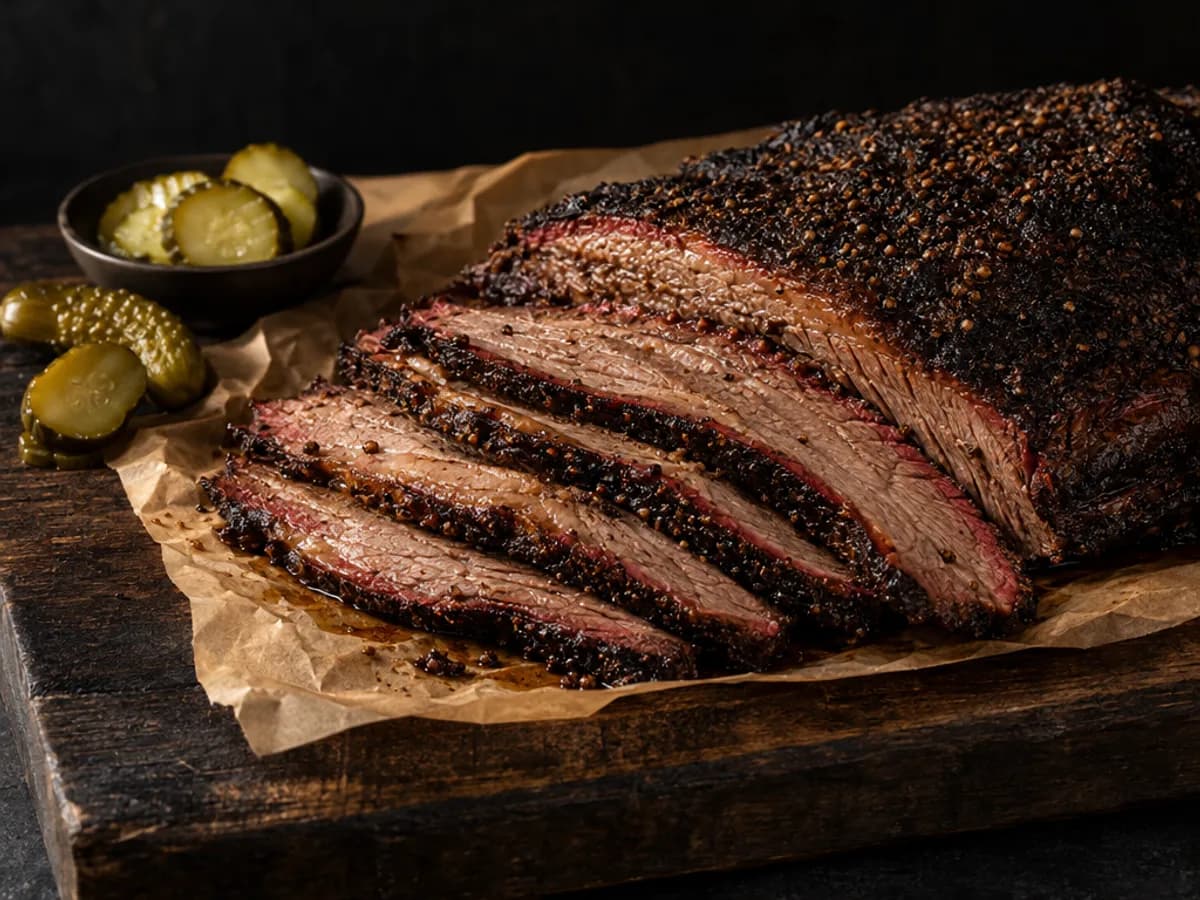
Season generously with coarse pepper and salt. Cook at 110 to 125°C with a little wood for smoke. After several hours, when the bark is dark and set, wrap the brisket in butcher's paper or foil to keep it moist, and keep cooking until it reaches 90 to 95°C and probes like soft butter. A whole brisket can take 10 to 12 hours, so start early.
Rest It
Brisket needs a long rest, at least 30 minutes and ideally an hour, still wrapped. This lets the juices settle back through the meat. Wrapped in a towel inside an empty esky, it will stay hot for a couple of hours.
Slice Across the Grain
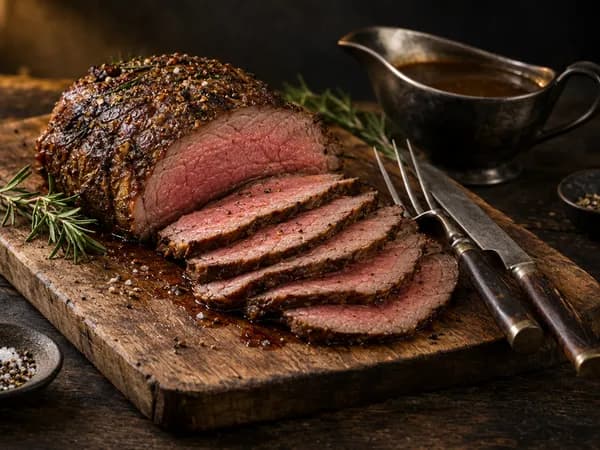
Look at the direction of the fibres and cut across them, about the thickness of a pencil. The grain in the point and the navel run in different directions, so on a whole brisket, separate the two and slice each one on its own.
Serving and Leftovers
Serve it with the cooking juices, pickles, coleslaw and soft white bread. Leftover brisket is excellent in tacos, toasted sandwiches, or chopped into baked beans or a hash.
Corned beef is brisket too, cured in brine and gently simmered. For more slow cooking ideas, try our pulled pork method, or browse the BBQ Guide.