Free cooking guide
The Pork Guide
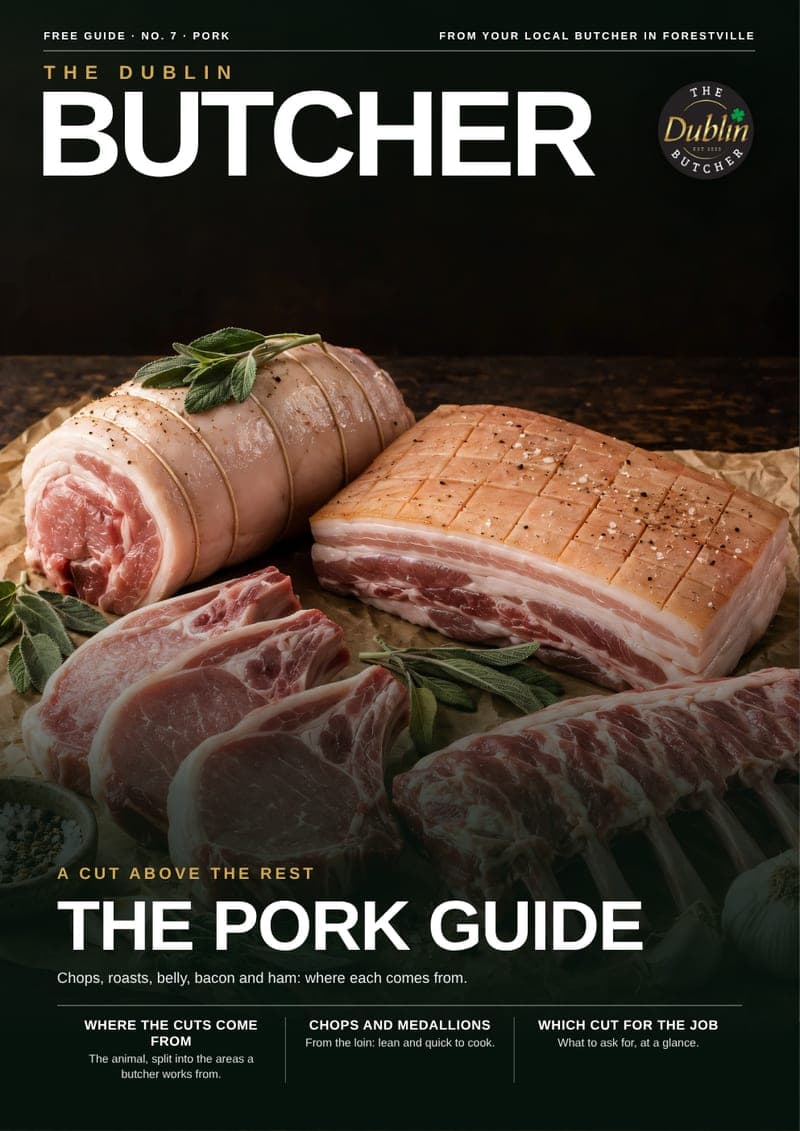
Chops, roasts, belly, bacon and ham: where each comes from.
Pork comes in four big pieces: the shoulder, the loin along the back, the belly underneath and the leg. The loin gives lean chops and roasts; the belly gives rich, fatty cuts, ribs and streaky bacon; the leg gives big roasts, gammon and ham. Lean pork cooks quickly and dries out if you overdo it, so a thermometer is your friend.
Get the printable PDF
The whole guide, designed to print or keep on your phone. Pop in your email and we'll send you the link.
 Illustration
Part 1
Where the cuts come from
The animal, split into the areas a butcher works from.
- 1Neck and shoulder
- 2Loin (cutlets, medallions, back rashers)Pork cutlet, Loin medallion, Yakitori pork medallion, Rolled loin, Pork rack, Back rashers
- 3Belly (belly, streaky, ribs)Pork belly, USA pork ribs, Streaky bacon
- 4Leg (roasts, ham, gammon)Pork leg, Gammon, Ham
- 5Hocks
Pork is cooked when it reaches about 70°C in the centre, then rested. Lean cuts like the loin are juiciest taken off right at that point.
Part 2
Chops and medallions
From the loin: lean and quick to cook.
Pork cutlet
From The loin, on the bone: the pork version of a lamb cutlet.
TendernessTender
FatSome fat
- Best for
- A quick dinner from the pan or the grill.
- How to cook it
- Medium-high heat until it reaches about 70°C in the centre, then rest it for a few minutes so it stays juicy.
Loin medallion
From The loin, boned and cut into thick rounds.
TendernessVery tender
FatLean
- Best for
- A lean, tender round for a quick pan-fry and a sauce.
- How to cook it
- Pan-fry briefly over medium-high heat. Very lean, so take it off as soon as it is done.
Yakitori pork medallion
From Pork medallions in a yakitori-style marinade.
TendernessVery tender
FatLean
- Best for
- Dinner with no preparation.
- How to cook it
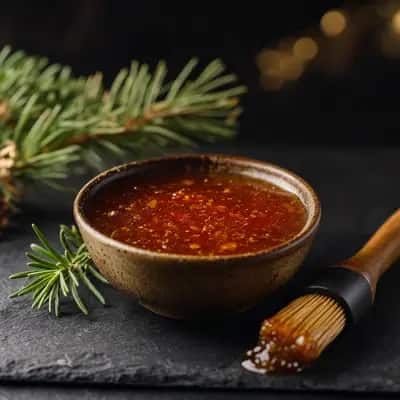
- Pan or barbecue over medium heat. The sweet marinade catches, so watch it near the end.
Part 3
Roasts and crackling
Dry skin, salt and a blast of heat.
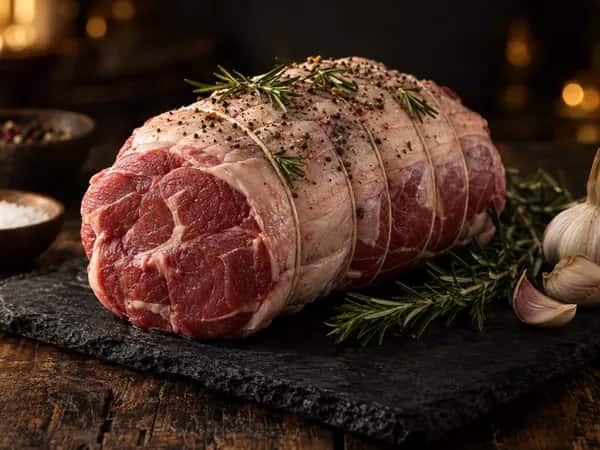
Rolled loin
Comes as: Plain, sage and onion, or fruit
From The loin, boned, with the rind left on, rolled and tied.
TendernessTender
FatSome fat
- Best for
- A Sunday or Christmas roast with crackling all round.
- How to cook it
- Dry the rind, start at 230°C for 25 to 30 minutes, then 180°C until it reaches about 70°C (the Roast & Christmas Guide has the method).
Pork rack
Comes as: A rack of 8 to 9 ribs
From The loin on the bone: a row of cutlets left joined, for roasting.
TendernessTender
FatSome fat
- Best for
- A showpiece roast, carved into chops at the table.
- How to cook it
- Score the rind and roast it like a rolled loin: hot to start, then gentler, to about 70°C.
Pork leg
Comes as: Whole or half on the bone, or boneless
From The back leg.
TendernessA little chewy
FatSome fat
- Best for
- A big roast with plenty of crackling for a crowd.
- How to cook it
- Roast like the loin, hot then gentler, to about 70°C in the thickest part. Rest it uncovered.
Part 4
Belly and ribs
The rich end: layers of fat and meat.
Pork belly
From The underside: layers of meat and fat under the rind.
TendernessA little chewy
FatRich, well marbled
- Best for
- Crackling, slow roasting and crispy belly bites.
- How to cook it
- Roast it for crackling, or cook it slowly, then cut it into bites and crisp them up.
USA pork ribs
Comes as: Plain or in a barbecue marinade
From Racks of ribs from the rib cage.
TendernessA little chewy
FatRich, well marbled
- Best for
- Sticky barbecue ribs.
- How to cook it
- Cook low and slow, wrapped in foil, until tender (about 2 hours at 150°C), then glaze on a hot barbecue or in a hot oven.
Part 5
Bacon, gammon and ham
Cured pork: salted, and sometimes smoked or cooked.
Back rashers
Also called irish back rashers
From The loin with a little of the belly: a round eye of lean meat and a tail of streaky.
FatSome fat
- Best for
- A proper fry-up and bacon rolls.
- How to cook it
- Fry or grill over medium heat, 2 to 3 minutes a side.
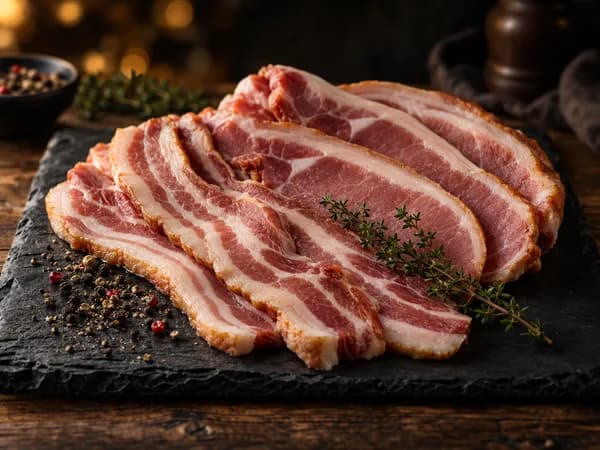
Streaky bacon
From The belly: thin layers of fat and meat.
FatRich, well marbled
- Best for
- Crisp bacon, wrapping pigs in blankets and flavouring stews.
- How to cook it
- Fry until crisp. It gives off plenty of fat, so start in a cool pan.
Gammon
Comes as: A leg on the bone, a boneless leg, or steaks
From The back leg, cured (salted) but not cooked. Ham is cured and cooked: that is the difference.
FatSome fat
- Best for
- Boiled or roasted gammon, gammon steaks, and pea and ham soup.
- How to cook it
- Gammon is raw, so it must be cooked right through: simmer or roast a joint, pan-fry the steaks.
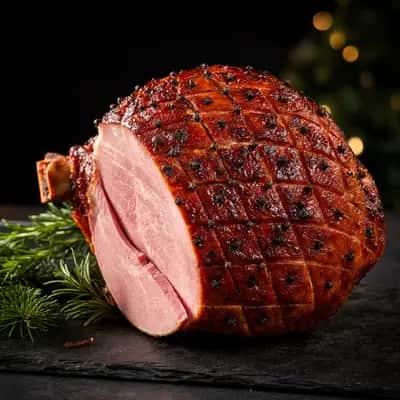
Ham
Comes as: Full, half shank, half chump or boneless
From The back leg, cured and cooked. The shank half is the lower leg; the chump half is the top.
FatSome fat
- Best for
- Christmas, glazed, then sandwiches and soup for days.
- How to cook it
- Already cooked: warm and glaze it at 180°C for about 45 minutes to 1 hour, or serve it cold.
Part 6
Mince and sausages
For the everyday.
Pork mince
Comes as: Pork, pork and veal, or sausage mince
From Trimmings from several cuts, minced.
FatSome fat
- Best for
- Dumplings, meatballs, sausage rolls and stuffing.
- How to cook it
- Always cook pork mince right through, to 75°C.
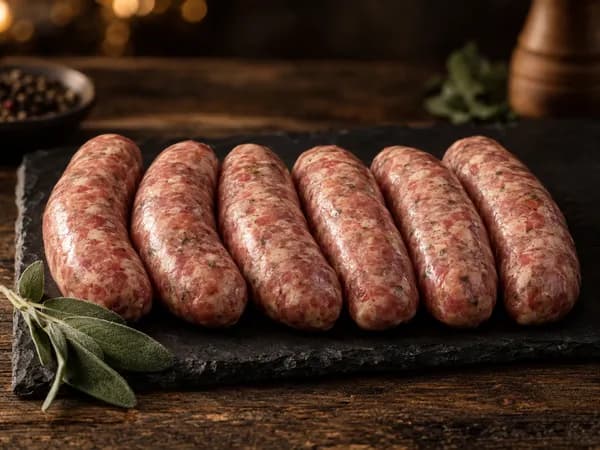
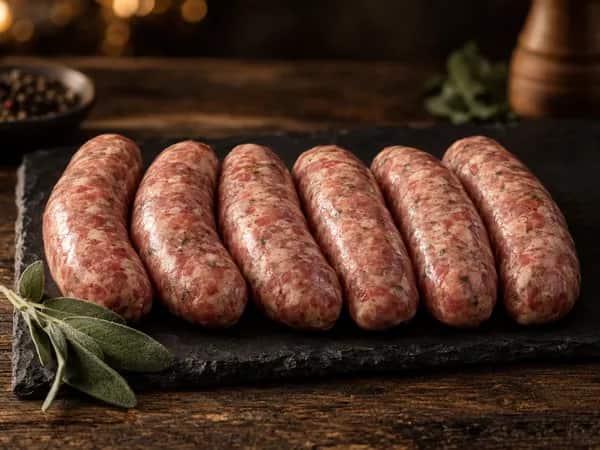
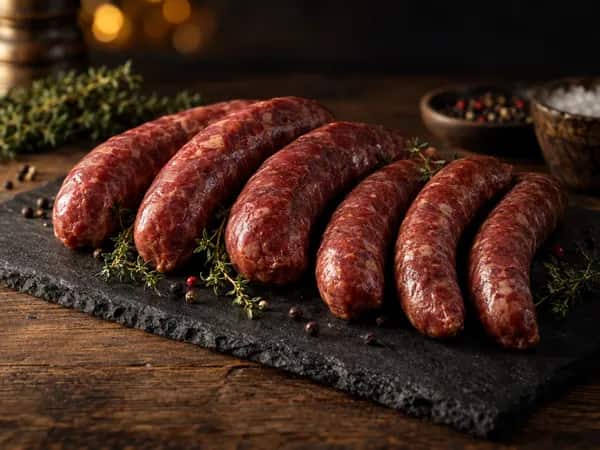
Pork sausages
Comes as: Irish or Dublin pork
From Seasoned pork mince in a casing.
FatSome fat
- Best for
- Breakfast, bangers and mash, and the barbecue.
- How to cook it
- Cook gently, turning often, so the skins do not split. Done at 75°C in the centre.
Part 7
Which cut for the job
What to ask for, at a glance.
| You are cooking | Ask us for |
|---|---|
| A quick dinner | Pork cutlets or loin medallions |
| A roast with crackling | Rolled loin, rack or leg |
| Slow and rich | Pork belly |
| Barbecue ribs | USA pork ribs |
| A fry-up | Back rashers and pork sausages |
| Christmas | Ham, or a gammon to cook yourself |
Keep it in the kitchen
The Pork Guide as a printable PDF, free. We'll email you a link to download it.
More free guides
 The Steak GuidePick the cut, cook it right, rest it, slice it.
 The Roast & Christmas GuideBeef, lamb, pork with crackling, the ham and the turkey.
 The BBQ GuideHow much to buy, and how to cook it for a crowd.
 Recipe CardsEight favourites from the butcher's block, one card each.
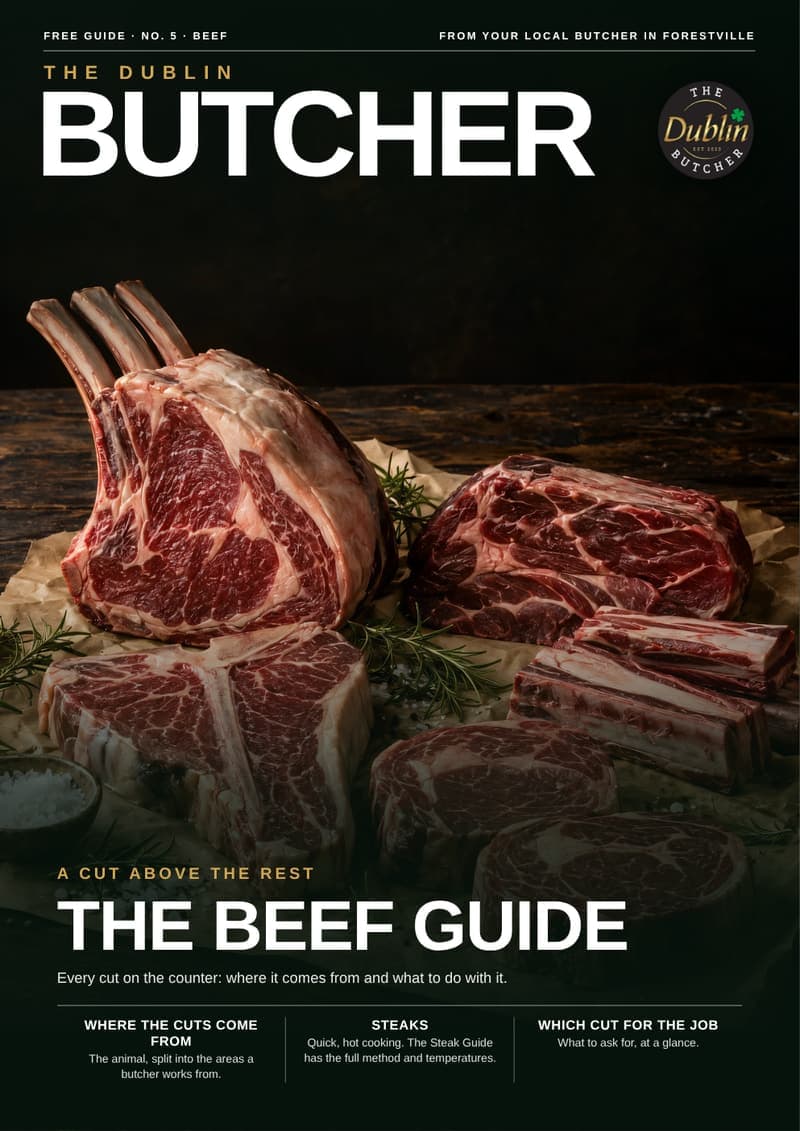 The Beef GuideEvery cut on the counter: where it comes from and what to do with it.
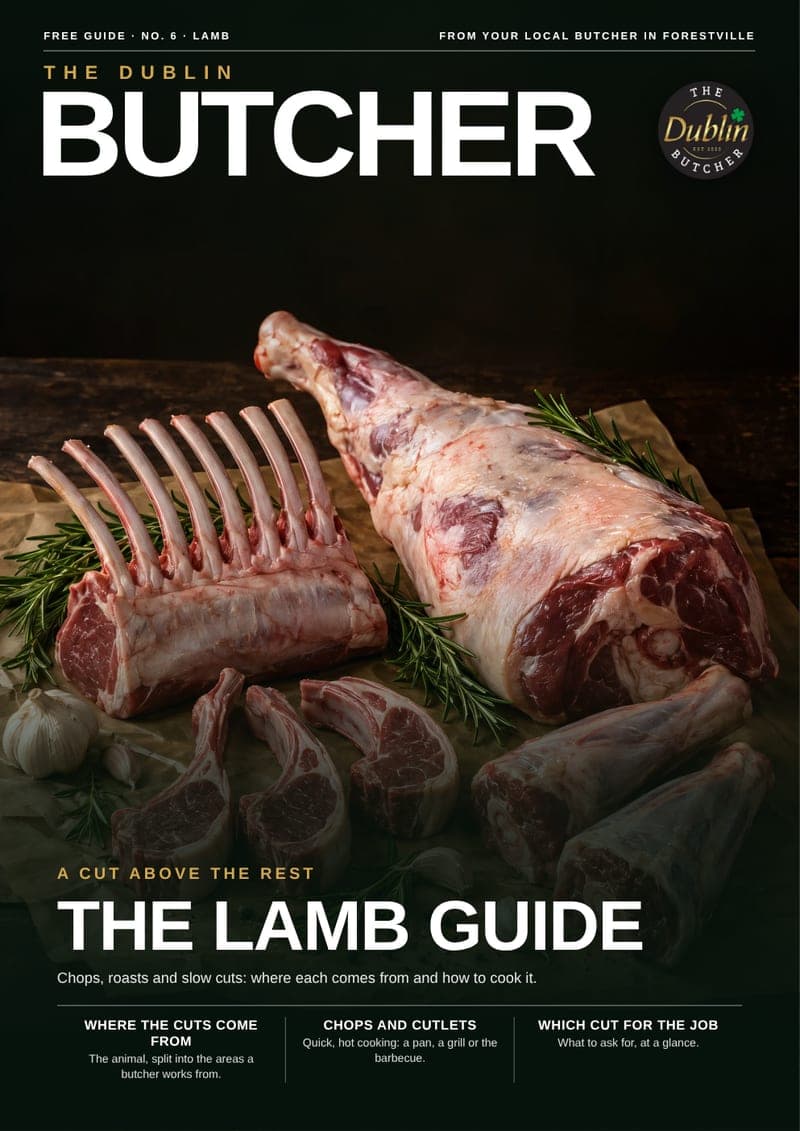 The Lamb GuideChops, roasts and slow cuts: where each comes from and how to cook it.
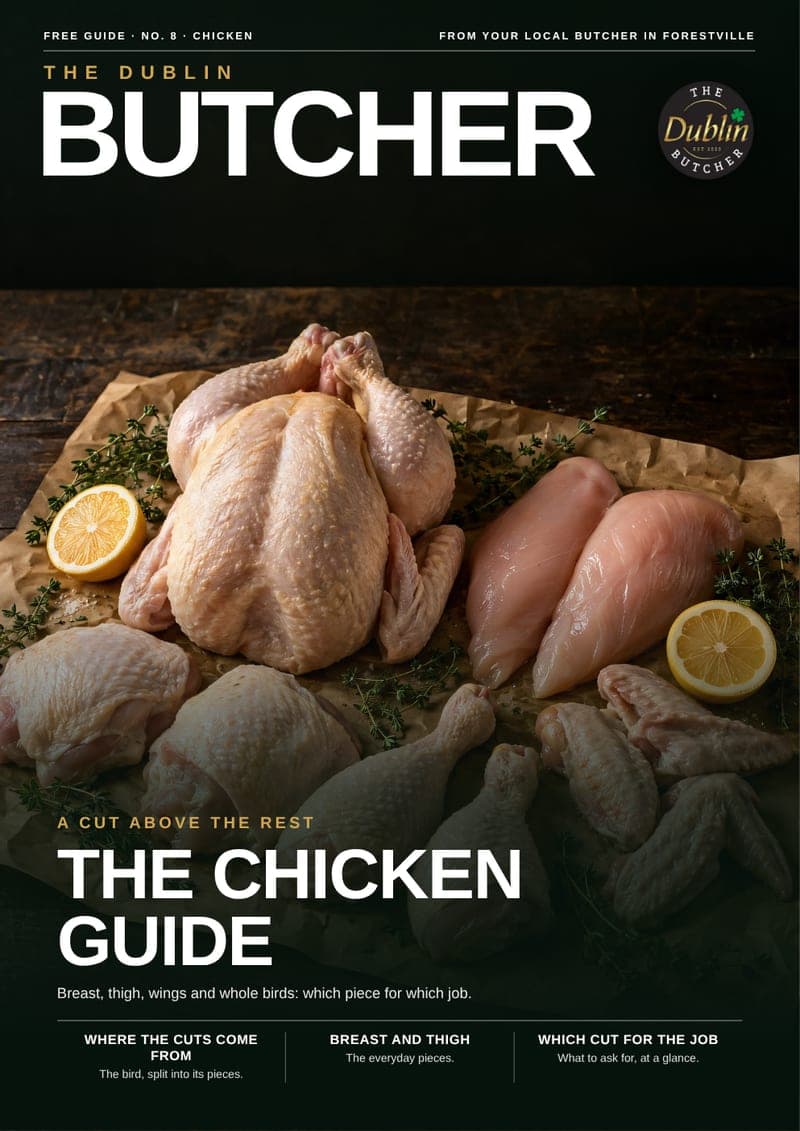 The Chicken GuideBreast, thigh, wings and whole birds: which piece for which job.